Remembering
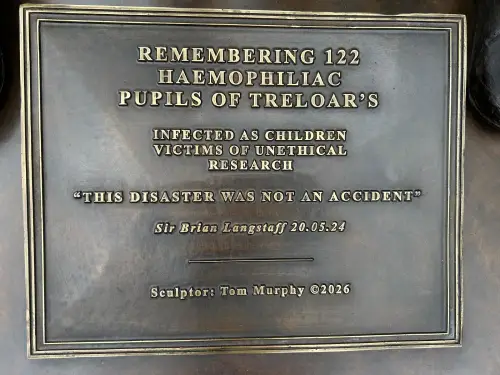
122 haemophiliac pupils of Treloar's
Infected as children. Victims of unethical research
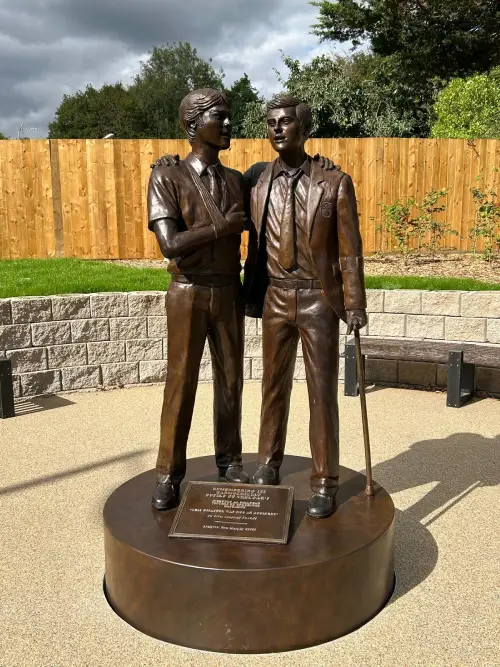
We will never forget them
122 boys with haemophilia went to The Lord Mayor Treloar College, Hampshire in the 1970s, 80s and 90s. They expected care and education but for many the treatment they received would ultimately cost them their lives.
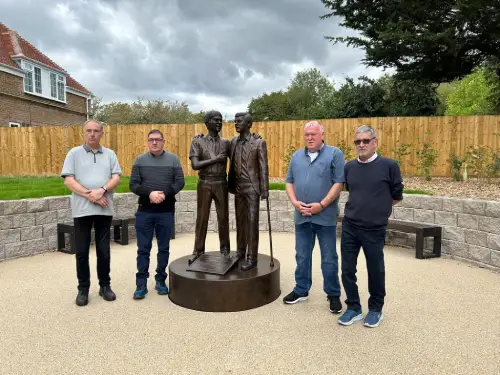
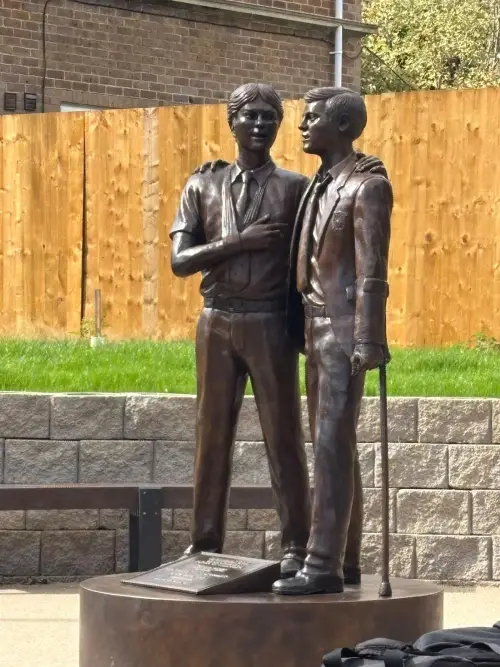
This memorial commemorates the 90 former pupils who have died as a result of the treatment they received at Treloar's and the others who continue to live with the consequences of what happened.
The experience of the Treloar's boys is part of the wider story of the infected blood scandal, in which thousands of people with haemophilia and other patients were infected with HIV and hepatitis viruses through contaminated blood products. At least 3,000 people across the UK have died as a result.
The Lord Mayor Treloar Cripples' Hospital and College was established in 1908 to provide care, education and training for boys with tuberculosis. It soon became a school for boys with all kinds of disabilities and in 1953 it began accepting boys with haemophilia.
Haemophilia is an inherited condition in which the blood does not clot normally. People with haemophilia A have too little, or a defective form of a clotting protein called factor VIII. There is also a much rarer form, haemophilia B, where people lack adequate factor IX. Without treatment, bleeding can continue for hours or days and repeated bleeding into joints and muscles can cause permanent disability.
The boys with haemophilia were often unable to take part in regular education and were often hospitalised to deal with routine bleeding incidents, sometimes weekly. A playground accident could be fatal.
Treloar’s offered the boys a haven where they could receive an education, make friends and take part in a wide range of activities in idyllic surroundings, with the comfort of having 24-hour medical care at hand provided by the National Health Service (NHS).
By the 1970s, Treloar's had around 50 boarders with haemophilia and 150 other students with a range of disabilities.
But all was not as it seemed. The concentration of haemophiliacs in one place represented an opportunity for scientists keen to study the condition and the effects of different treatments.
Much of the research involved injecting the pupils with factor VIII from different sources and under different treatment regimes.
Factor VIII concentrate was made by processing donated human blood plasma and could be injected to replace the missing clotting factor. It transformed the treatment of haemophiliacs and allowed them to live normal lives. It acted fast and could be administered at home or at school.
The problem was not the treatment itself but the fact blood products such as factor VIII carried inherent dangers.
Donated blood can contain viruses. All it takes is a tiny amount of infected blood to contaminate a whole batch and infect anyone who is injected with products made from it.
Factor VIII produced by the NHS was considered to be relatively safe. It was made from volunteer donations and produced in small batches. But the NHS did not produce enough factor VIII for the UK so it had to import it from abroad.
The United States also produced factor VIII concentrate. Much of the US plasma used to make these products came from commercial collection centres, where donors were paid. The plasma was then pooled in very large batches. The larger the pool, the greater the number of donors contributing to each batch and therefore the greater the opportunity for an infected donation to contaminate the finished product.
All these risks were known to the NHS and the clinical staff at Treloar's but they were never communicated to the pupils or their parents.
Throughout their school lives, the boys can recall getting ill or fellow pupils developing a yellow complexion as a side effect of hepatitis. This would in and of itself have a devastating effect on their future lives but in the early 1980s a new more deadly threat appeared in the UK: AIDS.
By 1981, doctors were reporting cases of a new and sometimes fatal disease that became known as AIDS. It was later established that HIV, the virus that causes AIDS, could be transmitted through contaminated blood and blood products.
Clinical staff at Treloar's began examining pupils for the 'stigmata of AIDS' in February 1983, but their treatment did not change, leaving the boys at risk of contracting HIV through contaminated blood products.
By February 1985, 37 pupils had tested positive for HIV, the virus that causes AIDS. One boy was diagnosed with HIV at the age of 12 but doctors did not tell his parents for three years. It later emerged that out of the 122 boys with haemophilia who went to Treloar's, 87 were infected with HIV.
Only some of the boys were told they had HIV and then this devastating information was passed on perfunctorily without support or empathy. Others only found out after they left school. Many faced discrimination in public life at a time when people were ignorant and fearful of the disease.
The boys were also exposed to Variant Creutzfeldt-Jakob disease, the human version of Mad Cow Disease which can sometimes be transmitted via blood products.
As the enormity of what the boys at Treloar's and others affected by infected blood became clear, they sought justice and compensation.
In 1985, the government indicated in a ministerial statement to the House of Commons that it regarded the infections as an unfortunate accident and rejected calls for a public inquiry. There would be no investigation, no justice and no compensation.
Even at this point, the boys at Treloar's continued to be treated with infected blood products.
In 1987, the government agreed to give £10 million to the Haemophilia Society as a gesture of good will. This began a 30-year process of denial, prevarication and piecemeal gestures by successive governments.
It wasn't until 2017, when Theresa May was Prime Minister, that the government finally announced a statutory public inquiry into the infected blood scandal. This heard evidence from victims, clinicians, politicians and more over several years with the findings published in May 2024 including a specific section on Treloar's, the experiences of former pupils there, the failings of care and trust found to have taken place at the school and the unethical research that went on.
This report led the government to set up a compensation scheme for victims of the infected blood scandal and their families, totalling around £12 billion including former pupils at Treloar's.
Another recommendation of the Inquiry Final Report was that a national memorial should be established to remember the victims of the infected blood scandal, which has taken the lives of so many across the UK.
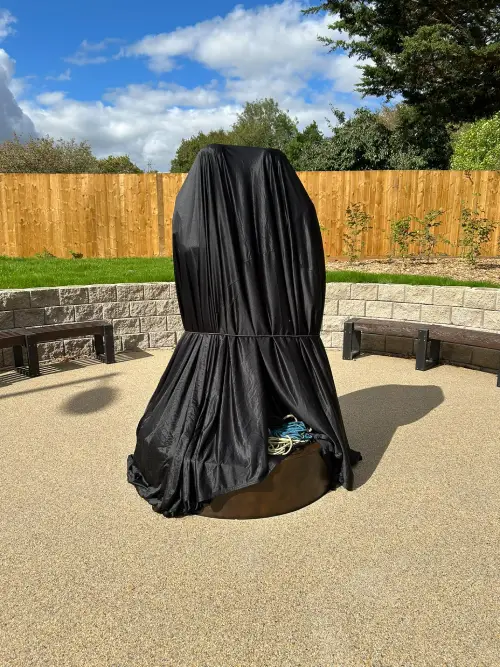
This memorial specifically remembers the victims who attended Treloar's School. It was unveiled on 26 September 2026. It honours the boys who came to Treloar's seeking education, friendship and medical care, those who became infected through the treatment they received, those who died, and those who continue to live with the consequences.
We will never forget them